

Nov 19, 2026
By Goodnight Staff 
They say all roads lead to Rome. After a few days there, you’ll understand why nobody wants to leave. It’s also why more than 22 million tourists visit every year.
The city is breathtaking.
Its 2,700-year history runs from the center of the great Roman Empire, through the Middle Ages as the heart of Western Christianity, to today’s status as one of the world’s top tourist destinations. Few cities can match it for history.
Landmarks such as the Colosseum and the Pantheon are a testament to this history. The Colosseum, once home to gladiator contests before crowds of tens of thousands, still dominates the skyline. The Pantheon’s dome, nearly 2,000 years old, remains one of the largest unreinforced concrete domes in the world.
However, Rome offers far more than historical landmarks. Beyond them are charming neighborhoods, lively piazzas, and narrow streets that seem untouched by time. This variety is a big part of why the city draws so many visitors, and it’s the reason you should plan a visit.
If you’re not sure where to start, this list can help.
Source: wikimedia
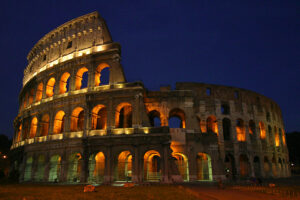
The Colosseum is so popular that it has become synonymous with Rome itself.
You've probably seen it in photographs, documentaries and countless films. But seeing it in person is a completely different experience. It's quite a sight to behold. The sheer size of the structure is impressive, especially when you consider that it was built almost 2,000 years ago.
Completed in AD 80 during the reign of Emperor Titus, the Colosseum could accommodate tens of thousands of spectators who gathered to watch all sorts of public spectacles including animal hunts, public executions and most famously gladiatorial matches.
Walk in through the arches and the street noise drops away. The oval arena opens up in front of you, ringed by tiers of stone seating that once sorted the crowd by rank. Senators and officials sat near the front. Ordinary Romans sat higher up. It set the standard used by most sports stadiums today.
The original wooden floor is long gone. That means you can look straight down into the maze of walls and passages underneath, where animals and fighters waited before the show.
Climb to the upper level and the view changes. The arena is below you and the Roman Forum stretches out beyond the walls. This is where you’ll want your camera. There is also a small museum inside, with artifacts from the Colosseum’s past.
When planning your visit, set aside at least half a day to explore all three attractions. The simplest option is to buy the combined Colosseum, Roman Forum and Palatine ticket through the official Colosseum Archaeological Park website.
Source: wikimedia
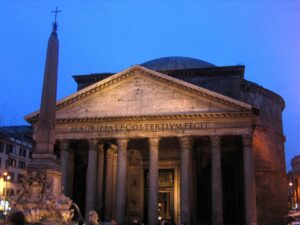
The Romans were remarkably good builders. The Pantheon stands as testament to that fact.
Standing at 43 meters tall, you might think of it as just another ancient building from the outside. But step inside and you will find yourself standing beneath an enormous concrete dome with a circular opening at its centre. With its 43.44 m internal diameter, is still the widest hemispherical dome ever built in unreinforced concrete, larger than that of St. Peter’s.
And right at the centre of that dome is an opening known as the oculus which creates a spectacular astronomical effect whereby every 21 April at midday, a beam of light enters the Pantheon at such an angle as to perfectly hit the center of the entrance.
Take some time to explore the interior too. You'll find the tomb of Renaissance artist Raphael, along with the resting places of two Italian kings. Look closely at the dome's recessed square panels, known as coffers, which help reduce its weight while adding to its beauty.
The Pantheon is right in the historic centre, just a short walk from Piazza Navona, making it easy to combine the two attractions.
Source: wikimedia
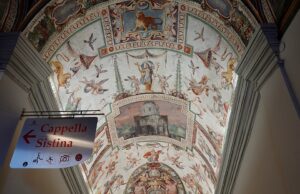
The Vatican Museums are home to one of the world's greatest art collections. And while you could spend an entire day exploring them, most visitors are particularly keen to see one place: the Sistine Chapel.
The museums contain an extraordinary collection of sculptures, paintings, tapestries and historical objects gathered by popes over several centuries. One of the highlights is the Gallery of Maps, with its beautifully decorated walls. But the real showstopper is the Sistine Chapel.
Its ceiling was painted by Michelangelo between 1508 and 1512, and the famous Creation of Adam is just one of the scenes you'll find there. He later returned to paint The Last Judgment on the chapel's altar wall.
The Sistine Chapel is also where cardinals gather during a papal conclave to elect a new pope, making it an important religious site as well as an artistic masterpiece.
When planning your visit, allow at least three hours to explore the museums without rushing. The Sistine Chapel is included in your museum admission ticket and comes towards the end of the usual visitor route. Book ahead through the official Vatican Museums ticket portal, as tickets can be difficult to secure during busy periods.
Source: wikimedia
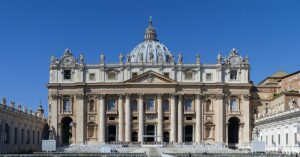
St. Peter's Basilica is so enormous that it's difficult to appreciate its size until you're standing right in front of it.
Located in Vatican City, it is one of the most important churches in Christianity and a masterpiece of Renaissance architecture. Step inside and you'll find magnificent marble floors, enormous columns, beautiful mosaics and works of art, including Michelangelo's famous sculpture, Pietà.
Outside, St. Peter's Square is just as impressive. Designed by Gian Lorenzo Bernini, its sweeping colonnades seem to embrace the crowds who gather here, especially during papal appearances and major religious celebrations.
If you have time, consider climbing to the top of the dome. The climb takes some effort, but the views across Vatican City and Rome are worth it.
Source: wikimedia
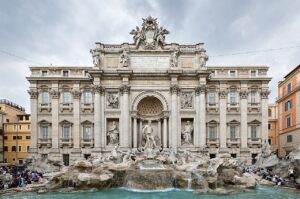
There's something almost theatrical about the Trevi Fountain. Tucked between narrow streets, it suddenly appears before you, with cascading water, enormous sculptures and a beautiful Baroque façade.
Completed in 1762, the fountain was designed by Nicola Salvi and later finished by Giuseppe Pannini. At its centre is Oceanus, the Roman god of the sea, riding a shell-shaped chariot pulled by two sea horses.
Of course, no visit is complete without tossing a coin into the water. According to tradition, doing so over your left shoulder means you'll return to Rome one day. It's a simple ritual, but one that's become part of the city's identity.
Source: wikimedia
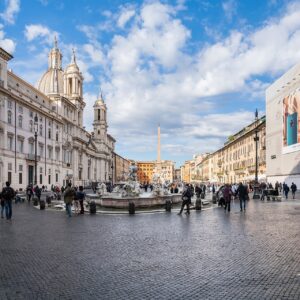
Piazza Navona was built on the site of the ancient Stadium of Domitian, which hosted athletic competitions. Its long, oval shape still follows the outline of the original stadium.
Today, the square is famous for its three fountains, particularly Bernini's magnificent Fountain of the Four Rivers. Its four statues represent the Danube, Ganges, Nile and Río de la Plata, symbolising the four continents known at the time. You'll also find beautiful Baroque buildings, the church of Sant'Agnese in Agone and plenty of cafés where you can sit and watch the world go by.
It's a lovely place to slow down and enjoy Rome without having to follow a packed sightseeing schedule.
Source: wikimedia
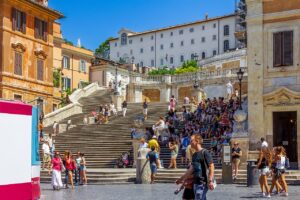
The Spanish Steps are one of those places in Rome where the setting is just as interesting as the attraction itself.
Built between 1723 and 1726, this elegant staircase connects Piazza di Spagna with the Church of Trinità dei Monti at the top. Its sweeping design makes it one of the city's most recognisable landmarks, and in spring, the steps are decorated with beautiful azaleas.
At the bottom, you'll find the Fountain of the Barcaccia, a charming boat-shaped fountain designed by Pietro Bernini and his son Gian Lorenzo. The surrounding streets are also worth exploring, with stylish boutiques, cafés and the former home of English poet John Keats just steps away.
Source: wikimedia
If you want to experience a different side of Rome, spend an afternoon getting lost in Trastevere.
This charming neighbourhood, whose name means "beyond the Tiber", is known for its narrow cobbled streets, colourful old buildings, little shops and traditional restaurants. It's a lovely contrast to the grand monuments and busy squares in the historic centre.
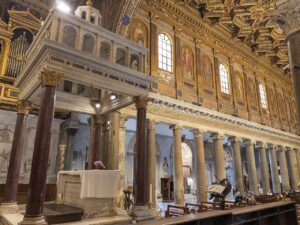
Make your way to Piazza di Santa Maria in Trastevere, the neighbourhood's main square. At its centre is one of Rome's oldest fountains, while the beautiful basilica overlooking it is famous for its medieval mosaics.
Source: wikimedia
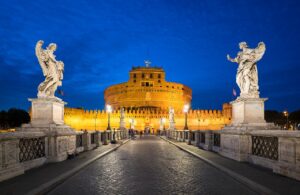
Few buildings in Rome have had as many different lives as Castel Sant'Angelo.
Originally built in the 2nd century AD as a mausoleum for Emperor Hadrian and his family, it later became a military fortress, a papal residence and even a prison. Today, it is a museum where you can explore its historic rooms, old defensive structures and impressive collections.
One of its most interesting features is the elevated passageway known as the Passetto di Borgo, which connects the castle to the Vatican. Popes could use it as an escape route when the city was under attack. Head up to the rooftop terrace for wonderful views of Rome and St. Peter's Basilica.
Source: wikimedia
Want to see some of the treasures that have survived from ancient Rome? The Capitoline Museums are a good place to start.
Located on Capitoline Hill, the museums date back to 1471, when Pope Sixtus IV donated a collection of bronze sculptures to the people of Rome. That makes them among the oldest public museums in the world.
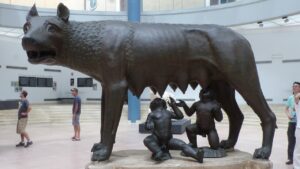
Inside, you'll find an impressive collection of ancient sculptures, paintings and historical objects. Two highlights are the famous Capitoline She-Wolf, depicting the legendary founders Romulus and Remus, and the original bronze equestrian statue of Emperor Marcus Aurelius. There's also the Capitoline Venus and the striking statue of the Dying Gaul.
The museums are spread across two historic palaces connected by an underground gallery, which also offers lovely views over the Roman Forum.
Source: wikimedia
Rome has plenty of beautiful buildings, but sometimes it's nice to take a break from all the history and enjoy a little greenery. That's where Villa Borghese comes in.
This large public park was originally created as an estate for the wealthy Borghese family in the early 17th century before becoming a public park in 1903. Today, it's a lovely place to walk, cycle or simply relax beneath the trees.
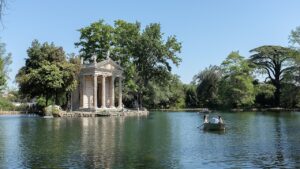
There's plenty to discover along the way, including a small lake with a beautiful Temple of Asclepius, fountains and elegant gardens. The park is also home to the Galleria Borghese, which houses an impressive collection of paintings and sculptures by artists such as Bernini, Caravaggio and Raphael. And if you make your way to the Pincio Terrace, you'll be rewarded with one of the best views across Rome.
Source: wikimedia
Some of the best views of Rome don't come from the top of a famous monument. Sometimes, all you need is a quiet garden on a hill.
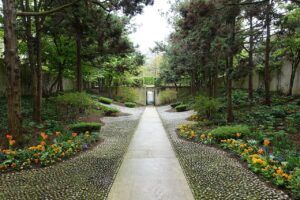
The Orange Garden, officially known as Parco Savello, sits on the Aventine Hill. It's a peaceful little park filled with orange trees, shady paths and a lovely terrace overlooking the city. From here, you can see the Tiber River, Rome's rooftops and the dome of St. Peter's Basilica in the distance.
The garden was designed by architect Raffaele De Vico and opened in 1932, on the grounds of a former medieval fortress. Just a short walk away is another curious attraction: the famous Aventine Keyhole, through which you can see St. Peter's dome perfectly framed by a garden avenue.
Source: wikimedia
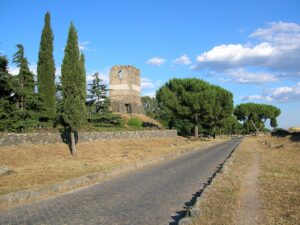
Imagine walking along a road that Roman soldiers, merchants and travellers used more than 2,000 years ago. That's the experience waiting for you on the Appian Way.
Built in 312 BC, it was one of the most important roads in the Roman Empire, originally connecting Rome to Capua before being extended all the way to Brindisi. The Romans called it Regina Viarum, meaning the Queen of Roads, and it's easy to see why when you explore its remarkably preserved sections.
Today, the ancient road takes you past old stone tombs, ruins, countryside villas and catacombs. Some of the highlights include the Tomb of Cecilia Metella and the Catacombs of San Callisto. You can explore on foot or rent a bicycle and enjoy what feels like an open-air museum just beyond the busy city centre. The Appian Way was also added to the UNESCO World Heritage List in 2024.
Source: Wikimedia
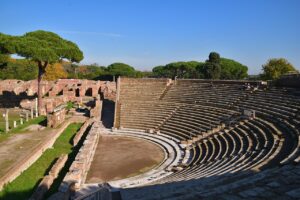
Located just outside Rome, Ostia was once the city's main commercial port. At its height, it was a busy town of more than 50,000 people, serving as a gateway for goods arriving from across the Roman Empire.
Today, you can wander along its ancient streets, explore remarkably preserved houses with colourful mosaics, visit the public baths and even see a large Roman theatre. One of the most interesting places is the Piazzale delle Corporazioni, where mosaics on the floors of former trading offices reveal the different merchants and businesses that operated here.
It's a wonderful place to get a sense of what everyday life was like in ancient Rome, away from the emperors and grand monuments.
Source: Wikimedia
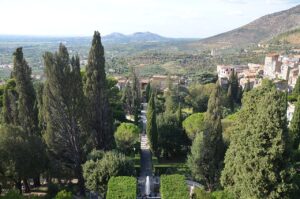
Just outside Rome, the town of Tivoli is home to two remarkable attractions that feel like completely different worlds.
The first is Villa d'Este, a magnificent Renaissance villa built for Cardinal Ippolito II d'Este in the 16th century. Its gardens are the real highlight, with beautiful terraces, hundreds of fountains, water features and even a hydraulic organ that plays music using flowing water. It's one of the finest examples of Italian Renaissance garden design and a UNESCO World Heritage Site.
A short distance away is Hadrian's Villa, the sprawling country residence of Emperor Hadrian, built in the 2nd century AD. The enormous complex once included palaces, baths, theatres, gardens and pools. Today, you can explore its impressive ruins and get a sense of the scale and luxury of imperial Roman life.
The two villas offer very different experiences, but both are worth seeing. If you have a full day to spare, Tivoli makes a wonderful escape from the busy streets of Rome.
The beauty of Rome is that there's always something new to discover, no matter how many times you visit. So take your time, explore beyond the famous landmarks and allow yourself to get a little lost along the way.

We’re excited to be working on helping you find the best hotel deals. Stay tuned.